SocialSecurity
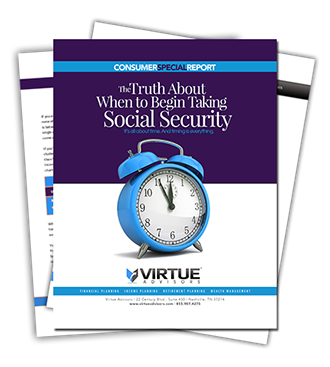
It's about time. And timing is everything.

Getting to know what, when, and how Social Security effects you.
A Social Security Special Report
According to the U.S. Social Security Administration, there are approximately
5.5 million Americans qualifying for Social Security benefits every year.
Social Security (SS) is one of the few remaining sources of lifetime, inflation-adjusted income available today, and it can play a very important role in a retirement income plan. However, in a BlackRock study conducted at the end of 2010, only 30% of investors were familiar with spousal benefit rules, while only 29% were familiar with survivor benefits, even though 75% said they felt confident in their knowledge of Social Security. You can help fill this knowledge gap and make informed decisions about your Social Security benefits. As you approach retirement age, you will be faced with deciding when to begin collecting Social Security benefits.
While conventional wisdom suggests that people should begin collecting Social Security retirement benefits as soon as possible, waiting to collect may be more beneficial since the baby boomer generation is expected to live longer than any previous generation. When they choose to collect Social Security benefits can have a significant impact on their comprehensive retirement plans and the decision should be discussed in proper context. This special report provides both a summary of the rules that govern Social Security as well as an outline of strategies for collecting benefits.
The fundamentals: Before you can make your own calculations, you need to understand the basics. If you were born between 1943 and 1954, you can collect your "primary insurance amount" at age 66. The full retirement age gradually rises to 67 for those born between 1955 and 1960, but for this story we'll assume 66 is the full retirement age.
You can start claiming at 62, but your benefit will be permanently reduced by a fraction of a percent for each month you claim before your full retirement age. Claim at 62, and your benefits will be cut 25% compared with what you would receive if you claim at 66.
You get a delayed retirement credit of 8% for each year you wait to claim past your full retirement age until 70. Say you're due $2,000 at your full retirement age of 66. If you claim at 62, you will get $1,500. Wait until 70, and your benefit jumps to $2,640 -- 76% more than the take-it-early benefit. (And that doesn't include the cost-of-living increases that add to the benefit while you wait.)
Currently, the maximum Social Security benefit for a worker retiring
at the full retirement age (66) is $2,533 a month.
SocialSecurity
It's about time. And timing is everything.
DOWNLOAD FREE REPORT
www.advisorswebsitehere.com | 800.000.0000
Watch the video and see why the 401kPlan Pro is a beast.
8 Big Factors to Consider First
There are several factors to consider when determining the optimal time
for you to begin taking your Social Security Benefits.
8
1. Longevity – What is your family history? What is your health history?
2. Are you married? If so, what is the age difference between the spouses?
3. Are you divorced? If so, did any of his or her previous marriages last at least 10 years?
4. The Social Security Surrender Penalty
5. Do you currently need the income from Social Security benefits?
6. How are taxes on Social Security benefits calculated?
7. Will you need to continue working after you begin to take Social Security benefits?
8. What impact will IRA/401k and other retirement account Required Minimum Distributions have on your taxable retirement income?
DOWNLOAD FREE REPORT
SocialSecurity
It's about time. And timing is everything.
www.advisorswebsitehere.com | 800.000.0000
Breaking down the factors
If you decide to retire, and you can only do so by taking Social Security now and
accepting the penalty, that’s a decision that ultimately rests with you alone.
1
2
3
5
6
7
8
DOWNLOAD FREE REPORT
Download the Free Report
For more information on Social Security, simply fill out the form below and instantly download our 11 page whitepaper report. There is no obligation, and the report is free of charge. Please feel free to call us or visit our website for any questions you may have.
Fill out the form and get it free.
Investment Advisory services offered through Virtue Capital Management, LLC (VCM): an SEC Registered Investment Advisor. Virtue Financial Advisors, LLC, and VCM are independent of one another. Insurance and annuity products are sold separately through (VFA).
Jeremy Rettich is the president at Virtue Advisors and Virtue Capital Management. He is also an independent financial advisor and has a personal practice, Virtue Financial Advisors, LLC, focused on retirement planning and investments. His personal practice is based in Nashville, TN, where he has helped pre-retirees and retirees plan their financial futures for many years. Jeremy specializes in showing clients how to take control of their future IRA tax liability, creating an income plan for life, and leverage the tax code to maximize their children’s, grandchildren’s and heir's inheritance through estate planning. While many of his clients do not initially understand how their money is invested and how it can work for them to accomplish their current and future goals, Jeremy provides them with the additional education needed on these unfamiliar subjects. Jeremy has multiple securities (series 7, 63, and 65) and life and health insurance licenses. He has been on the local CBS affiliate television station News Channel 5 and News Channel 5+ many times. He and his wife Nomi have four children and live in Nolensville, a small town southeast of Nashville. Family and faith are the foundations of his practice.
Ask the Social Security Expert.
Meet Jeremy Rettich, Financial Advisor
For more information about this great program and many others,
contact Jeremy Rettich, Financial Advisor at:

www.advisorswebsitehere.com | 800.000.0000
Investment Advisory services offered through Virtue Capital Management, LLC (VCM): an SEC Registered Investment Advisor. Virtue Financial Advisors, LLC, and VCM are independent of one another. Insurance and annuity products are sold separately through (VFA).
Best strategies on how to maximize
your social security benefits
DOWNLOAD FREE REPORT


Longevity
The single biggest and most difficult question to answer in determining when to take Social Security benefits
is how long you are going to live. If we knew exactly how long you would live, it would be infinitely easier
to know when to start taking benefits. In general, the longer you will live, the more sense it makes to delay
taking benefits. Remember, taking benefits early will result in reduced benefits, while delaying for a period
of time yields higher benefits.
Are you married?
If so, what is the age difference between the spouses? Qualifying for Spousal Benefits, individuals need not be eligible for individual benefits in order to qualify for spousal benefits. In order to be eligible to collect spousal benefits, an individual must have been married to his or her spouse for at least a year. This requirement may be waived if he or she was previously eligible for spousal benefits or is the parent of his or her spouse’s child (although the child need not be alive). Additionally, the individual’s spouse needs to have filed for benefits, but need not be collecting them, in order for the individual to collect spousal benefits. There are other factors to consider such as “Termination of Eligibility for Spousal Benefits” and “Collecting Spousal Benefits at Full Retirement Age.”
Are you divorced?
If so, did any of his or her previous marriages last at least 10 years? A divorced spouse can apply for spousal benefits on his or her ex-spouse’s earnings record if:
• You are currently unmarried
• Both the individual and the ex-spouse are at least age 62
• They had been married for at least 10 years and they have been divorced for at least two years (this requirement is waived if the individual was entitled to individual benefits at the time of divorce)
Survivor Benefits for Divorced Spouses
A divorced spouse can apply for survivor benefits on his or her ex-spouse’s earnings record if:
• He or she is currently unmarried or his or her current marriage started after reaching age 60
• The individual is at least age 60 and the ex-spouse is deceased and they had been married for at least 10 years. There are also other factors to consider, such as “termination of eligibility for spousal benefits” and collecting divorced spouse benefits.
The Social Security Surrender Penalty
When you opt to begin receiving Social Security at age 62, you are surrendering 25% of your full Social Security retirement benefit (Primary Insurance Amount, aka PIA). On what other financial account would you be willing to accept a 25% surrender charge? Since Social Security is one of the most powerful incomes you can possess, does it make sense to accept that kind of loss? Please bear in mind, the power of Social Security goes beyond the mere benefit. It’s a tax-favored income; it’s guaranteed for life, indexed for inflation, and cannot be reduced. Again we ask: Are you willing to suffer a 25% surrender charge?
Do you currently need the income from Social Security benefits?
If you can’t retire without taking Social Security benefits, then you need to decide if you’re ready to retire or willing to keep working. If you can’t retire without Social Security and you’re determined to retire now despite the financial disincentives, then it’s not so much a financial calculation as it is a lifestyle choice. If you decide to retire, and you can only do so by taking Social Security now and accepting the surrender penalty, that’s a decision that ultimately rests with you alone. Only you can balance the emotional side of this important decision against financial considerations and decide if it’s worth it.
How are taxes on Social Security benefits calculated?
Whether your Social Security benefit is included in your income for tax purposes — and, if so, what percentage is included — is based on a formula known as Provisional Income. Provisional Income is the sum of all income, including interest and dividends from savings and investments, long and short term capital gains, income from working, interest from tax-free municipal bonds, income from pensions and interest from annuity income plus 50% of your total Social Security benefits.
Will you need to continue working after you begin to take Social Security benefits?
One of the most important considerations to account for is earned income before you reach “Full Retirement Age” (FRA) when you are receiving Social Security retirement benefits. Each of us has a “Full Retirement Age.” Depending on when you were born, that age gradually increases before capping at age 67. If you work after beginning to take Social Security benefits and before you reach your full retirement age, you may have to return part of your Social Security. The good news is that you won’t really “lose” the benefits that you give back because you get them back in the future. The bad news is, until you reach full retirement age, working can cause you to give back some of your Social Security benefits
What impact will IRA/401k and other retirement account Required Minimum Distributions have on your taxable retirement income?
One of the most overlooked planning areas is the consideration of what to do if you have significant retirement accounts (IRA/401k-type accounts) and how the withdrawals the government will force you to take when you reach age 70 ½ may cause your Social Security to be taxed. Many people ask, “Well, what can I do about that? After all, I have to make those withdrawals, right?” In short, yes. If you do nothing now, then you will have to take those required withdrawals. The question, then, becomes: What can you do now?
For more detailed information on these topics and more about Social Security,
simply download our free report report below.
www.advisorswebsitehere.com | 800.000.0000

SocialSecurity
It's about time. And timing is everything.

Not endorsed or approved by the Social Security Administration or any other governmental agency.